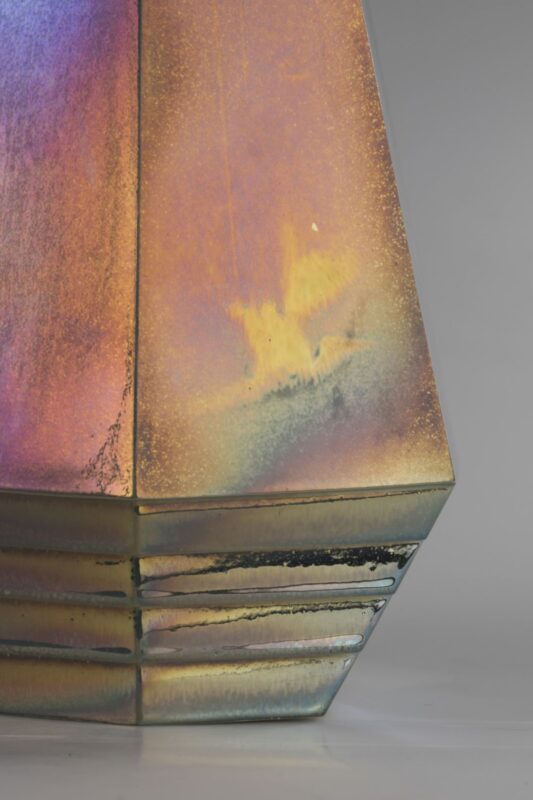


During her studies, Alison Thyra Grubb worked a lot with glazed lights to create geometric shapes with rich iridescent surfaces. He shares how his interest began, as well as the recipes for preparation.
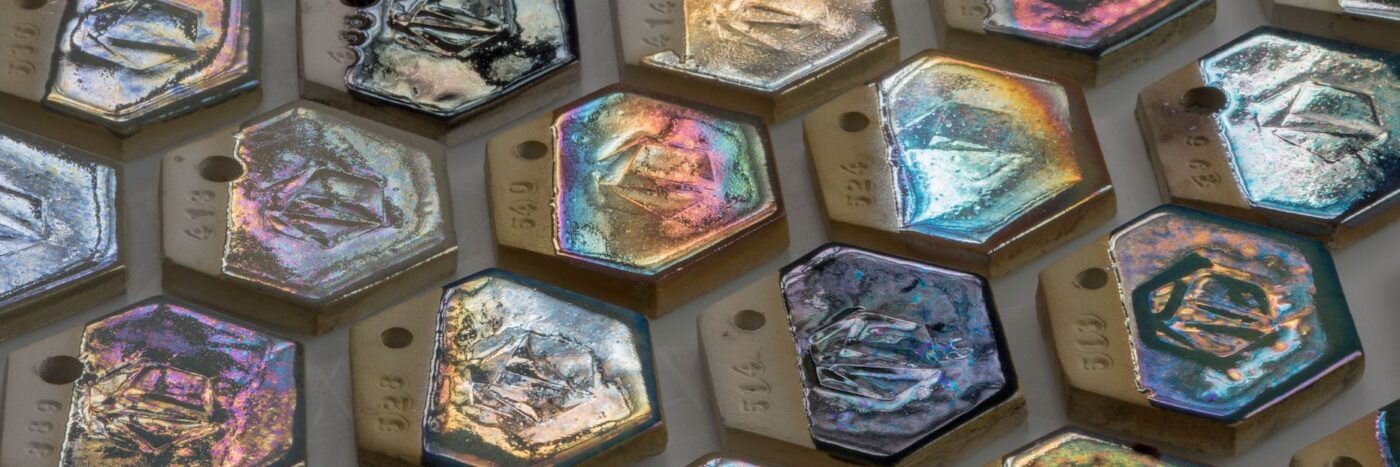
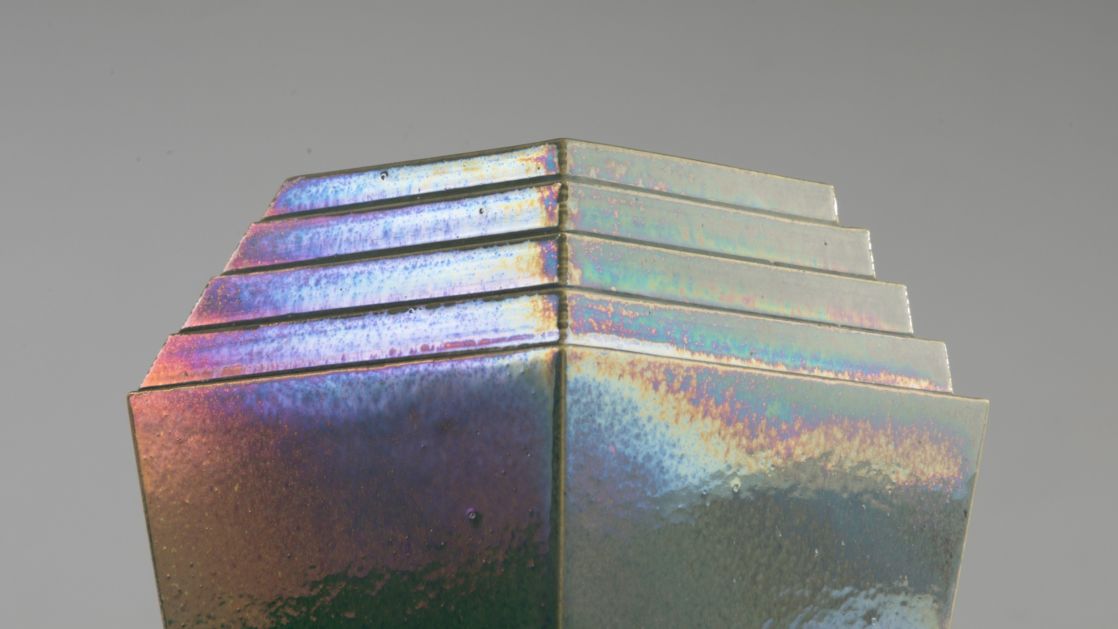
Over the past two years, I have experimented with glazing while graduating from Gray’s School of Art in ceramics. I use 3D printing to create precise, geometric shapes for sliding casting and finish them with iridescent glaze. These geometric vessels are inspired by metal bismuth, which is a component of many shiny glazes. I like the contrast between the unpredictability of bright glazes on predictable printed forms. I try to test new recipes for each burn, and I hope to one day make a full rainbow of shiny glaze.
My interest in glamour began when I visited Fiona Duckett's open studio at Watergaw Ceramics in Scotland. Fiona has more than 20 years of experience in shining inside the glaze and shared with me the recipe for the base glaze that I still use today. During my degree, I tested various oxide additives in Fiona's base glaze recipe and learned to refine the bright firing process.
I make my shapes from white clay casting and burn them to 1180°C. After that, I apply the glazes with either sauce or sprinkling, slightly thick. Then I burn the glazed dishes in an electric oven to 1020 °C. Then burn the glazes in a gas oven for the second time until cone 017. When the furnace reaches the temperature, I close the smoke pipe leaving a gap of 1-2 inches and reduce it to 20 minutes. During combustion, a chemical reaction occurs, and the metal oxides in the glaze turn into metallic, iridescent lights.
The result of a glaze may appear differently each time it is burned, and a glaze may vary depending on which shelf it was on or how close it was to the flame. Shiny glazes can be quite unpredictable, so I take notes every time I burn to learn from my mistakes and recreate successful results.
ALAPLAZE RECEPT
- Calcium borate fritt 60g
- Nepheline Sienite 10g
- Chinese clay 10 g
- Ball clay 10g
- Magnesium sulphate 3g
COLOUR CHANGES
Light blue (blue, purple and gold)
- Silver nitrate 1g
- Cobalt carbonate 1g
Green (gold, pink and blue iridescent)
- Silver nitrate 1g
- Cobalt oxide 1,5 g
Gold (pink, purple and yellow iridescent)
- Silver nitrate 1g
- bismuth trioxide 0,25 g
Deep green/gold/blue (bright multi-coloured iridescent effect when applied thickly)
- Silver nitrate 1g
- Cobalt oxide 1,5 g
- bismuth trioxide 1,5 g