
IP rating (Ingress Protection or International Protection) is a standard marking that shows how well the housing of an electrical device is protected against the intrusion of solid objects (such as dust) and water.
The code always consists of the letters ‘IP’ and two numbers: the first number stands for dust, the second for protection against water.
First digit (Powder and solids)
- 0: There's no protection.
- 1 to 4: Protection against bodies, wires or small tools.
- 5: Dustproof (dust penetration is not completely excluded, but does not damage the device).
- 6: Completely dust-free (full protection against dust).
The second digit (Water and moisture)
- 0: There's no protection.
- 1 to 4: Protection against dripping or splashing water.
- 5-6: Protection against jets of water and strong jets of water.
- 7: Protected against immersion in water (limited time, maximum depth 1 m)
- .8: Suitable for continuous underwater diving (to a depth specified by the manufacturer).
Common examples
- IP20: Indoor dry space devices (e.g. daylight lamp), not protected against water.
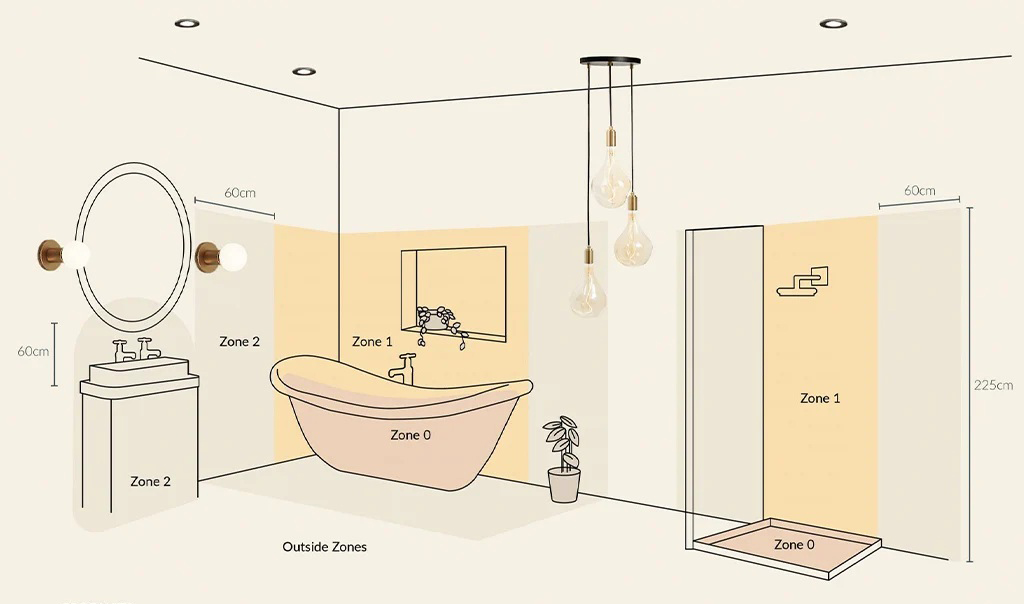
- IP44: Protected against splashing water (e.g. bathroom lamp).
- IP65: Dust and low pressure water jet resistant (outdoor devices).
- IP67 / IP68: Dust-free and immersible (smartphones, sports watches).