
Blog, DESIGN, Press release
the Blickfang Award VERTIGO
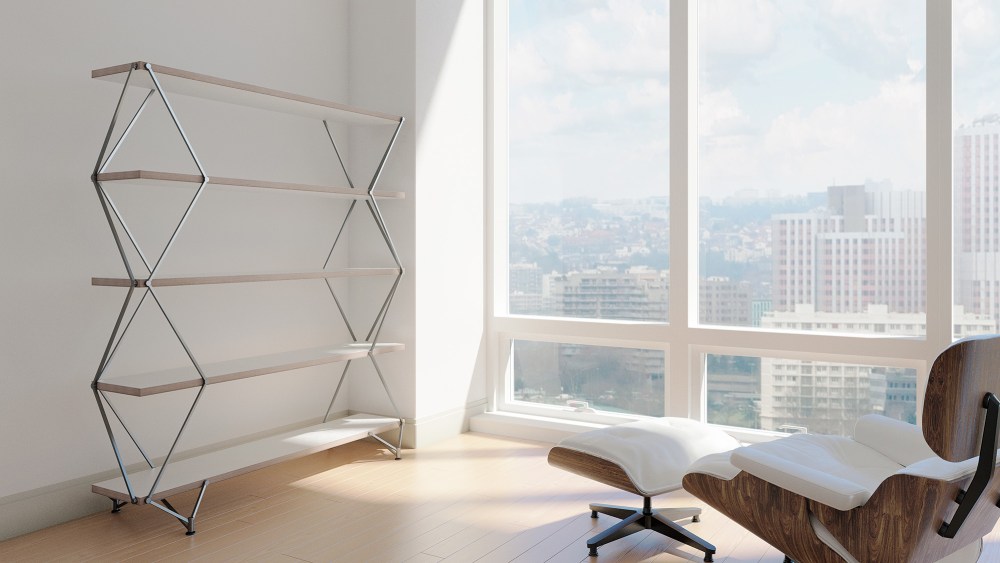
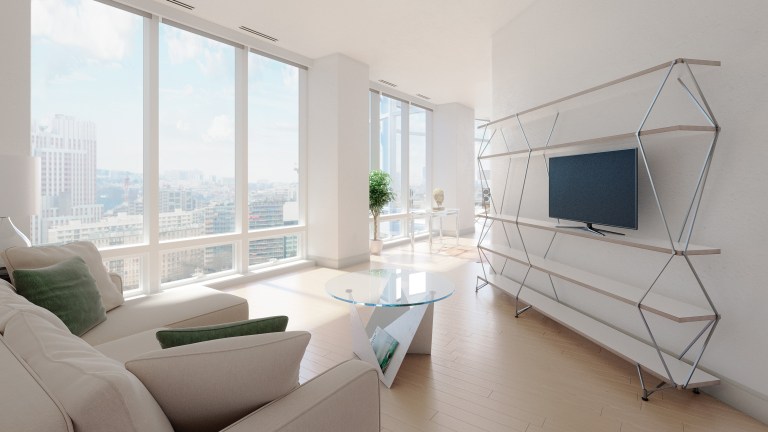
The VERTIGO shelving system, which can be configured according to the user's needs, is a special static construction that can be placed anywhere in the given space, is airy and looks good everywhere. The furniture designed by István Józsa received a Blickfang award last week. A YOZA We talked to the founder-designer of the brand.
This year you were an exhibitor at the Hungarian Design Award exhibition with VERTIGO, and a few days ago you received an award in Vienna for the same piece of furniture, for which we congratulate you. What does this recognition mean to you?
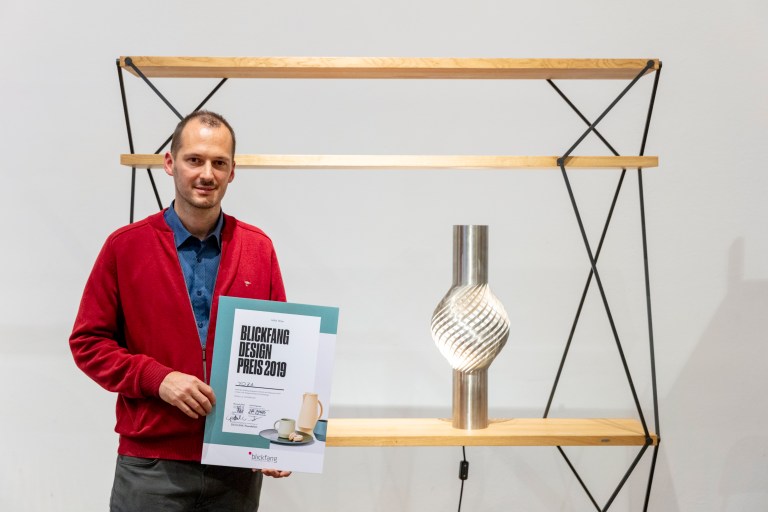
A Blickfang an international design exhibition and fair, where I took part in the Hungarian stand organized by FISE. The award itself was a huge surprise. I didn't recognize the jury members who visited my booth at first, I thought they were just interested, and I was disappointed that after a long questioning they didn't buy anything. However, when they came to me again, they introduced themselves and indicated that I was on the shortlist and asked me to participate in the evening awards ceremony. It is that the VERTIGO The shelving system was chosen as the best in the furniture category only at the award ceremony. I was very pleased, especially because the head of the professional jury, Erich Gaffal, the head of the Austrian Furniture and Wood Architecture Cluster (MHC) praised the furniture at length in his speech, presenting the airy static structure, the clean nodes and the variability, all the things for which I actually created it. The award also attracted the attention of visitors, many congratulated him, and orders were also received.
Where did this furniture come from, when and how did it come into being? What was your main source of inspiration? Or: What other aspects did you take into account in your planning?
The development of the VERTIGO shelf was a long experimentation process. The starting point of the design is essentially the interior design mapping of tetrahedral structures used in bridge structures and transmission line columns. My goal was to find a static structure consisting of as few elements as possible, in which rods form a rigid connection between two plane surfaces. The final system was achieved at about the fifth real-size prototype, by which time the shelf had become stable from all directions, and twisting had also been eliminated.
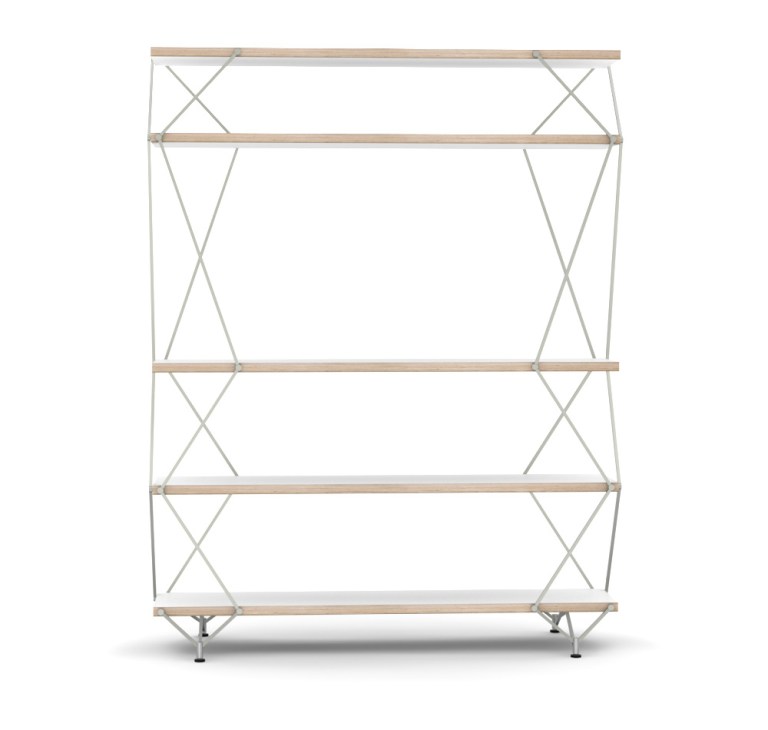
The next step was the development of chain-linked metal brackets. These make it possible to connect vertically any number of shelves, so that the distance between the shelves can vary. The shape of the consoles was inspired by the metal structure of the Chain Bridge, in which similar links in the shape of a characteristic ‘dog bone’ were used.
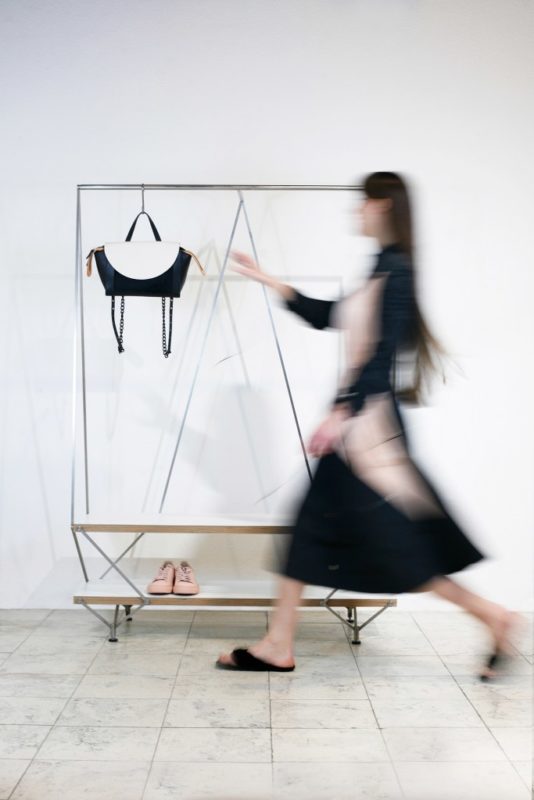
In its current form, the shelving system was first introduced in 2014 in London. Designjunction Since then I have participated in numerous exhibitions in Hungary and abroad. Since each customer has different requirements, we customize the system in size, color and assembly, and we also try to meet individual requests. These user needs help the further development and perfection of the system, thus expanding the system with the sliding door closed element, the corner element and the double shelving system.
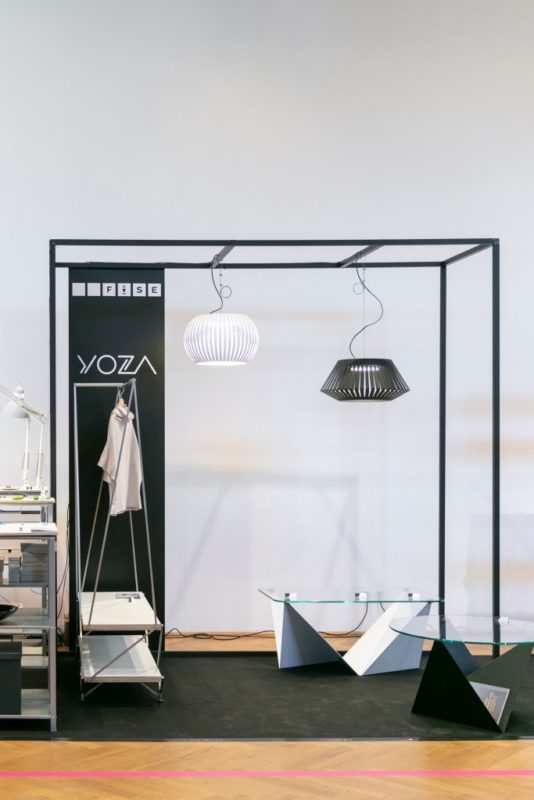
You have been participating with FISE in various exhibitions and trade fairs abroad for five years, and now you have been together in Vienna – already a recurring exhibitor – to strengthen the role of Hungarian designers on the international market. Seeing the results, this collaboration is very successful. How do you see it: How difficult is it for a Hungarian designer to compete on his own? How and what changed your career?
I was delighted when in 2014 FISE I went to the Designjunction exhibition in London. In fact, this was the first time that I participated in a prestigious foreign fair, not as a visitor, but as an exhibitor. These exhibitions provide an excellent opportunity for designers to meet potential buyers in person and receive direct feedback from those interested. Things get a completely different light and meaning when we talk about a particular design object in a professional conversation or in a school exam situation, and again when we are faced with a person who has to decide whether to spend his money with us or with another exhibitor.
Participation in foreign exhibitions requires significant financial and logistical costs, and as a beginner designer it is not easy to create these conditions. Group exhibitions, like those organised by FISE, are a great help in taking the first steps.
Do you have another plan up your sleeve? Plans for the future? As far as I know, you're about to do something with Daniella Koós, ….
In the future, too, the VERTIGO I would like to expand the offer of the YOZA brand with objects similar to shelves, attracting attention and looking for the intersections of design, architecture and fine arts. Thanks to the NKA creative scholarship, the SPLIT metal lamp family will soon be on the market, which was born as a result of an experiment in sheet metal processing.
Daniella Koós Since 2014, we have exhibited together at international trade fairs and worked together on various projects through FISE. Since we are both furniture designers and we offer our products to similar target audiences, we have decided to merge our products for a more efficient market presence, which in the future will be YOZA They will be available under the brand name. Currently the HFDA Design SPEED Mentor Program We are taking part, which came at the right time, as this way we can develop our post-merger strategy with the help of experts.
Source: HYPEANDHYPER


