






Lighting, Blog, Press release
What is the brightness of 1000 lumens?
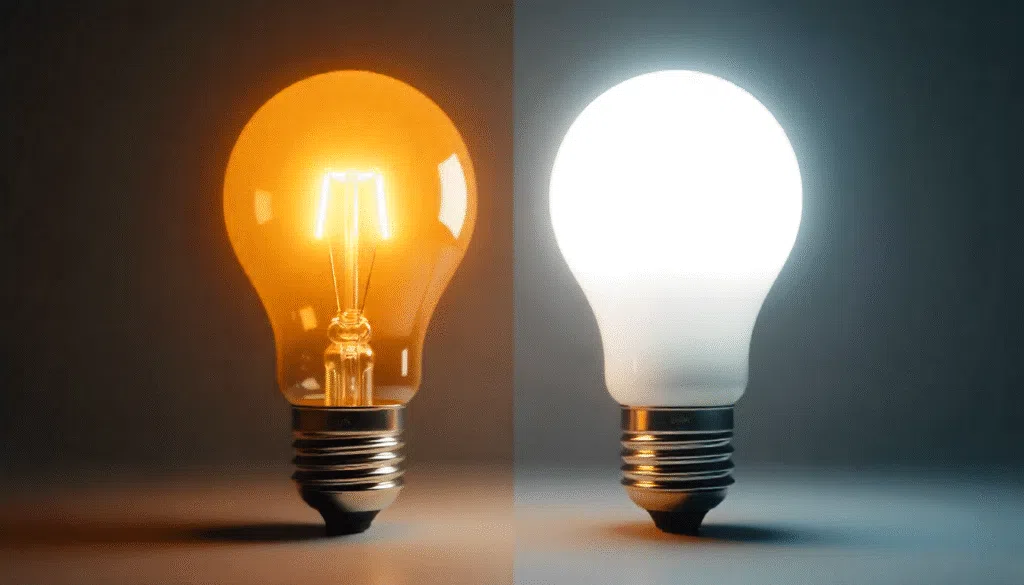
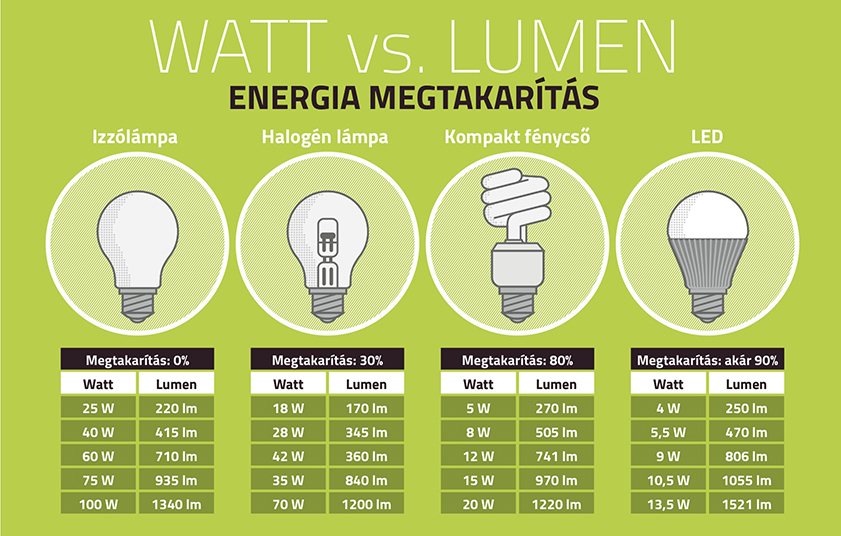
1000 lumens is roughly equivalent to the brightness of a conventional 75 watt incandescent lamp. This amount of light is enough to illuminate, for example, a dining table, a living room or a medium-sized room.
Since LEDs have largely replaced incandescent lamps, the watt value is no longer a reliable measure of brightness. Instead, the luminous flux expressed in lumen indicates how much light a light source actually produces. However, factors such as beam angle, color rendering and interior design also influence how brightness is ultimately perceived. In the next blog post, we will explain what the lumen value says and which factors affect the perceived brightness.
How many watts is 1000 lumens?
A modern LED bulb usually emits about 1000 lumens at a power of just 8-10 watts. This means that it requires significantly less energy than older filament lamps of similar brightness – energy savings of up to 90%.
As the efficiency may vary depending on the manufacturer, the design and additional functions, these data are for information only. When comparing brightness, the luminous flux in lumen is now a much more meaningful indicator than the power in watts.
These factors affect the perception of brightness
Filament lamps emit their light roughly uniformly in all directions and have a beam angle of more than 270 degrees. Unfortunately, this aspect of the light effect is not taken into account when determining the luminous flux. This is because many LED bulbs are designed to concentrate light more intensively, resulting in a lower beam angle. Consequently, they illuminate at a smaller solid angle than incandescent lamps. This applies in particular to directional lamps, such as spotlight bulbs. In addition, in many cases, the design of the luminaire, with a reflector or lens elements, also affects the perceived brightness.
Tip 1: As with conventional incandescent lamps, we offer LED filament bulbs for near spherical light distribution. They contain thin light-emitting filaments, called filaments, which resemble filaments of filament lamps, but are equipped with LEDs. The arrangement of the filaments results in a nearly spherical light distribution.
So we can already conclude that 1000 lumens is not always the same as 1000 lumens. This is because in order to be able to accurately compare the brightness of different light sources, it is necessary to take into account spatial conditions. For example, it is the distance between the light source and the illuminated object that counts, as well as whether a light or dark room is illuminated.
Tala CO64-dim 3W/gd 922, E27 LED
In general, the light of a luminaire is perceived as stronger and more intense in a light environment than in the dark. This is because light surfaces reflect light more than dark ones. So, if you want to illuminate a room with a dark color scheme, the lumen value should generally be higher than in light rooms.
Colour reproduction also affects the perception of brightness. Indicates how naturally the colors of illuminated objects or surfaces appear. If the color rendering index is quite low, the colors are perceived as quite pale. At the same time, the brightness is perceived to be slightly fainter. In contrast, with a high color rendering index, light appears brighter and brighter to us.
Conclusion – Lumen as a benchmark for LED brightness
In summary: the indication of the luminous flux in lumen is an appropriate benchmark for comparing the luminous intensity of different light sources. Lumen values usually offer a good way to determine which LED light source is suitable to replace an old incandescent lamp. However, a number of factors, such as beam angle, color reproduction or general spatial conditions, influence the subjective perception of light. This should be taken into account when choosing the right amount of light.